
Relinquishing Israeli Citizenship in the Wake of the Gaza War: Not So Easy
“Last thing I remember, I was running for the door… I had to find the passage back to the place I was before.” — Hotel California, The Eagles, 1977

Last week, I flew to Chicago to visit the Israeli consulate. It was a big moment, and I was very nervous. You have to make these reservations months in advance, and I’d fixed one and then canceled several times before.
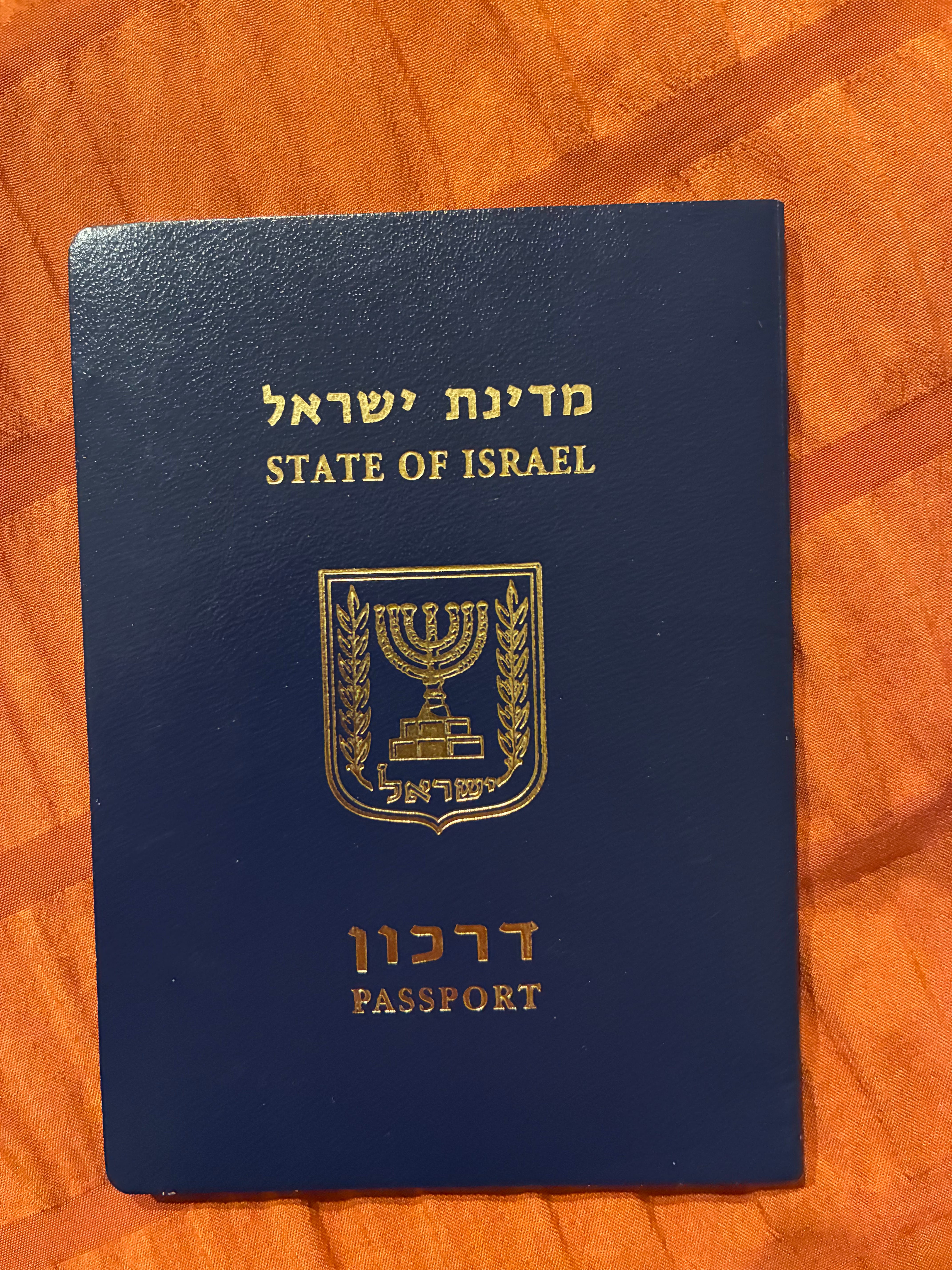
Ever since the early 1990s, I’ve felt deeply uncomfortable with the country’s treatment of Palestinians, along with its attitude towards settlements and the pursuit of war and peace. I left the country in 1993 and have returned only for a short visit. Now, it was time to take the final step: relinquishing my Israeli citizenship.
Entering the Consular Zone
The security guard buzzed me in. He was a young, muscular, and friendly fellow. He checked my passport and then, apropos of nothing, asked, “What’s your military ID number?”
Startled, I rattled it off without thinking; it was as if my tongue had over-taken my brain. A few seconds later, I wondered, “Why the hell would he ask that?” Was he trying to make sure I was who I said I was? It didn’t make sense; he had looked at my passport and asked me for my birthdate and full name. Why would my military ID be of interest? Why not ask for my citizenship ID number, which would be a more inclusive question? Every Israeli has a citizenship ID, but many Israelis don’t serve in the military, including those who immigrated there when they were older, ultra-Orthodox Jews, people with health concerns, and the 20% of the country’s citizenry of Arab descent.
Then, he asked an even more odd question: “What military unit did you serve in?” That seemed truly unnecessary. I’m almost 59, which means I was drafted 41 years ago. Why would a guy thirty-five years my junior ask that on a routine visit to the consulate? Was this his version of small talk?
A Teenager’s Response
Despite my utter dismay at what the Israeli army has done to Palestinians in Gaza after the deadly Hamas raid, my immature brain was strangely proud of my answer: “Paratroops.”
I served in a special unit of the airborne, the Palhan, which was an all-volunteer, top-tier infantry group — hard to get into, and hard to endure. I left regular Israeli military service in early 1988, over 37 years ago, but I’m writing about the experience now. The details, including those from the few years I spent in the reserves, remain fresh.
Even more oddly, I took it upon myself to challenge the guard. I asked, a bit provocatively, “So what was your unit?” Just as if I were a 19-year-old strutting along Jerusalem’s pedestrian mall. The question popped out, the Israeli teen version of, “Whose is bigger?”
He responded with the name of a respectable unit that was perhaps just a tad less prestigious than mine, in the eyes of people from my 40-year-old world. My teenage male brain, I’m sad to say, was gratified.
Bureaucratic Hurdles
Next, I entered the consular office itself, the Holy of Holies - a small room with only two all-powerful female clerks. I handed my paperwork to the older of the two, hoping we might develop a rapport based on our shared age.
“Why are you renouncing your citizenship?” she asked, and I responded with only a partial truth: “I’m downsizing. Selling my house and furniture, getting rid of clothes, trying to live more simply. Reducing.” I smiled at her, trying to channel a Buddhist vibe.
She looked confused, but still smiled. “You aren’t selling your citizenship, are you?” We laughed together, like old friends. Then, like a stern aunt, she remarked tartly, “If it were me, I’d never let my citizenship go.” I didn’t respond.
Next, bureaucratic disaster: “Married or single?”
“Divorced.”
She looked at her computer screen for a while, then took a deep breath. “OK, that’s a problem. I see you never registered either your marriage or your divorce with the Population Registry. We can’t proceed until you do so. You’ll need to register the marriage first, and then the divorce. We’ll need all these forms filled out, plus official copies of your marriage and divorce certificates, authorized by an apostille.”
An “apostille” is a difficult-to-arrange credential for international consular documents. Neither simple nor cheap. “You’ve gotta be kidding!” I wailed. “What do you need that for? My divorce was seven years ago, and we were married and divorced here in the US. My ex is not even Israeli.”
“It’s the law. The State of Israel needs to know what its citizens are up to.”
“Can’t you forget I just said I was married?” I asked, half jokingly. She looked pained. “I’d really like to. Other clerks might do that for you, but I just can’t. You’ll have to get those papers.”
“Please…” I whined, using what I hoped was a winning smile. I’m an educated, upper-middle-class Ashkenazi Jew with perfectly idiomatic Hebrew and a decent military past. Can’t you give me a pass, just this once? For the sake of our version of white privilege?
“No. So sorry.”
Can you Ever Check Out?
The consular clerk turned to her colleague. “Can you perhaps pretend you didn’t hear he was married?” They whispered together for a moment.
She turned back: “I’m sorry, we just can’t do it. You’ll have to fill out the necessary paperwork, get the apostilled certifications, and reapply later.”
I’d been psyching myself up for today’s meeting for months, and now it wasn’t going to work. Still, I tried to make light of it all. “So, it’s like Hotel California, right? You can check in, but you can’t check out?”
She laughed, and we had a moment of genuine connection. We were roughly the same age and used similar Hebrew accents and intonations. She had a daughter my children’s age, and we bonded like long-lost family members. That felt really good, for just a few seconds.
Why would you Ever Want to Leave Us Behind?
We’d gotten too close, too fast, however. “Why,” she inquired plaintively, “would you want to leave us?” A sudden attempt at emotional manipulation, the kind of thing one family member might do to another. Not part of a consular officer’s official job description.
Her question worked as intended, however, as I felt both embarrassed and ashamed.
“Surely, you understand,” I said, hoping I wouldn’t have to say more. For some reason, I didn’t want to keep emphasizing my alleged Buddhist turn. I wanted her to know the truth.
“No, I don’t understand at all,” she said, furrowing her brow. “Why?”
“The war,” I said, without elaborating.
“Which war?” she asked. She seemed genuinely confused.
Could I really be the only Israeli citizen she’d seen in the last two years who wanted out because of the Gaza war? The Hamas attack was brutal, but the response was wildly disproportionate. Call it genocide, call it something else — it’s horrific.
“You know, the one that just happened,” I said.
“Well, what about it?”
“It was just too awful.” I clarified: “I mean, it was too awful for me.” I don’t mean to assume it was too awful for you.
She looked at me, without comprehending. “Really? That’s odd. Most of the people coming through here are heading over to enlist.”
I assumed she was speaking of Israelis returning to do their military reserve service, and perhaps of young American Jews seeking to get in on the Gaza action. I knew a flood of reservists had returned home at the war’s outset in fall 2023, but I also heard the torrent had subsided as the war grew increasingly unpopular.
I laughed shamefacedly. “I did that enlistment thing a long time ago; I’m heading now in the opposite direction.” Her face closed; we were no longer friends. A coldness descended on the consular booth, and I felt very alone.
Family time was over.
A Metaphor
I got up to leave, but the door, oddly, wouldn’t open. I pushed and pulled with increasing desperation, but it just wouldn’t budge. I looked back at her helplessly. “You’ll have to wait a few moments,” she explained. “Security is checking someone in on the other side.”
The security booth was sealed like an airlock and could only be opened when the guard had processed a new batch of service-seekers.
I sat down and waited, but then turned back to the clerk, even though I realized we were no longer buddies. “It’s a metaphor, right? You can’t leave this office, or Israel, very easily.”
She grinned. “Yeah, Hotel California, right?”
Last thing I remember
I was running for the door
I had to find the passage back to the place I was before
“Relax,” said the night man
“We are programmed to receive
You can check out any time you like
But you can never leave.”Hotel California, The Eagles, 1977
I’m not sure what I’ll do now. I don’t really need to let the paper officially go in order to place psychological and moral distance between myself and what was, and still is being done, in Gaza. The passport can be a symbol of belonging, but only if you treat it that way. Otherwise, it’s just a piece of paper. No one is asking me to enlist in the military at my age, and I don’t pay taxes there any more.
It’s all in the mind.
Note: A longer version of this piece was originally published on Medium.
About the Author
James Ron is a writer and social scientist. In addition to teaching and doing academic research, he has consulted for the Canadian and Swiss governments, Human Rights Watch, CARE, and the International Committee of the Red Cross.
His books include Frontiers and Ghettos: State Violence in Serbia and Israel (University of California Press) and Taking Root: Human Rights and Public Opinion in the Global South (Oxford University Press).
To view James Ron’s scholarly publications, visit Academia.edu | Google Scholar | SSRN | PhilPeople | Research Gate | SemanticScholar
His website is www.jamesron.com. His research blog is available on www.jamesron.org.
Thank you for writing this. I've spent a lot of time considering renouncing lately, so the timing was perfect.